Victoria House Clearance: Recycling and Sustainability Commitment
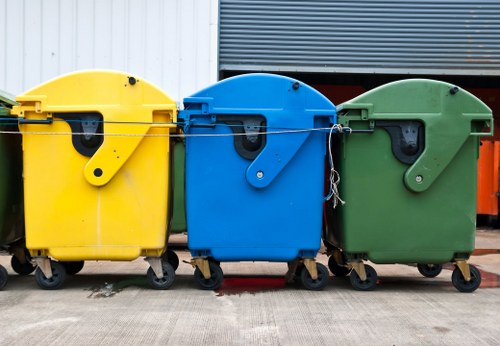
Victoria House Clearance is dedicated to delivering eco-conscious house clearance and sustainable rubbish removal across our service area. Our approach balances practical removal with an emphasis on reuse, recycling and low-carbon logistics. We recognise every cleared property is an opportunity to reduce landfill, support local charities and strengthen the circular economy. This page outlines our environmental goals, operational practices, and community partnerships that make our eco-friendly waste disposal and sustainable rubbish services real and measurable.Our Environmental Targets and Tracking
We set a clear recycling percentage target to drive continuous improvement: we aim to recycle 75% of all recovered materials by 2028. That figure covers direct recycling, material recovery for processing, and items redirected to reuse channels. To meet this target we track load-level diversion rates, measure tonne-by-tonne outcomes and publish annual progress summaries. Reducing carbon footprint and increasing reuse rates are equally important KPIs that guide daily operations.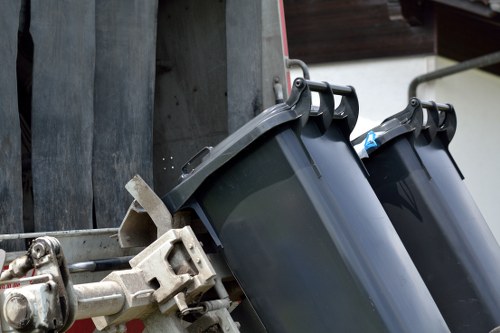 To align with borough and local authority approaches to waste separation, our crews follow established sorting protocols for dry recyclables, glass, paper, card, food and garden waste, plus separate collection for bulky items and WEEE. We integrate local boroughs' schemes into our workflow by segregating at source and prepping materials to the standards expected at transfer stations. Our recycling streams include:
- Household mixed recycling (paper, card, tins, plastics)
- Glass separated for colour-specific processing
- Textiles and small furniture for charity reuse
- Electrical items (WEEE) destined for authorized treatment
- Hazardous or specialist waste flagged for compliant handling
Local Transfer Stations and Material Flows
We partner with accredited local transfer stations and Materials Recovery Facilities (MRFs) to ensure materials are processed correctly. Transfers are scheduled to reduce double handling and idle time, which helps lower emissions from transport. Typical routing places bulky recoverables with local reuse centres or designated municipal facilities, while inert and construction-type wastes are directed to licensed aggregates or recycling yards. This collaboration with transfer stations is central to our eco-friendly waste disposal model. Partnerships with Charities and Reuse Networks are a cornerstone of our sustainable rubbish strategy. Rather than defaulting to landfill, we work with local charities, social enterprises and community groups to find new homes for furniture, household goods, books and textiles. Items in good condition are assessed on-site and logged for collection by partner organisations. When possible, we arrange direct handovers, or we consign items to charity warehouses where they are sold to support local services. These partnerships increase reuse rates and deliver social value in tandem with environmental benefits.
To support borough waste separation schemes and local circular initiatives we also collaborate with community workshops that refurbish electronics and carpentry projects that repurpose timber and fittings. That means a significant portion of material that traditionally becomes waste is instead repaired, sold, or incorporated into new products — reinforcing our sustainable rubbish area approach.
Operationally, our depots feature segregated bays for different material types and a clear chain-of-custody process so nothing useful is lost. Materials are weighed and logged at arrival, and loads leaving the premises are documented with destination details—transfer station, recycling processor or charity partner. This transparency supports our recycling percentage target and helps us refine logistics to further reduce environmental impact.
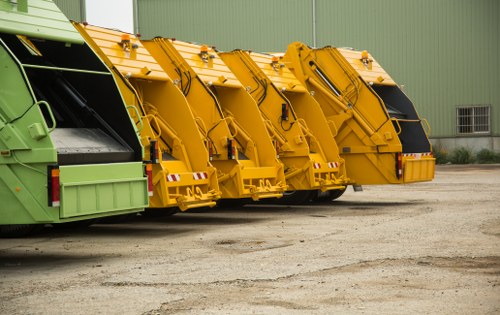 We are converting our fleet to low-carbon vans and more efficient vehicles to lower emissions from house clearance runs. Currently our fleet includes hybrid units and battery-electric vans used for short urban trips, supplemented by Euro 6 diesel for longer, heavier loads where no zero-emission option is yet viable. Route optimisation software reduces miles and idling time, and consolidated pick-ups limit the number of journeys. Together these measures cut fuel consumption and are part of our broader carbon reduction plan.
 Training and community engagement are essential: our teams receive regular instruction on waste separation, safe handling of reusable items, and how to spot goods suitable for donation. We run internal audits to ensure compliance with local authority standards and to keep our recycling percentage target achievable. Strong operational discipline keeps our sustainable rubbish area practices consistent, repeatable and verifiable.
Why choose our sustainable approach? Because it delivers measurable environmental and social benefits. Victoria House Clearance (also described in materials as Victoria house clearance services or Victoria clearance teams) moves beyond simple removal to responsible resource management — minimising landfill, supporting charities and reducing transport emissions. Our commitment is practical: we combine on-the-ground sorting, partnerships with transfer stations, charity networks for reuse, and a low-carbon vehicle strategy.
We continually review policy changes from local boroughs that affect separation and disposal, such as new directives on textile or battery collection. These updates are incorporated into our operational procedures so clients receive services aligned with municipal requirements. The result is a streamlined, eco-friendly waste disposal process that serves property owners and the wider community.
Our promise is straightforward: a transparent, accountable, and sustainable house clearance service that targets high recycling rates, strengthens local charity partnerships, and reduces transport emissions through low-carbon vans. Victoria House Clearance will keep refining practices to meet and exceed our recycling percentage target while delivering dependable, responsible clearances.