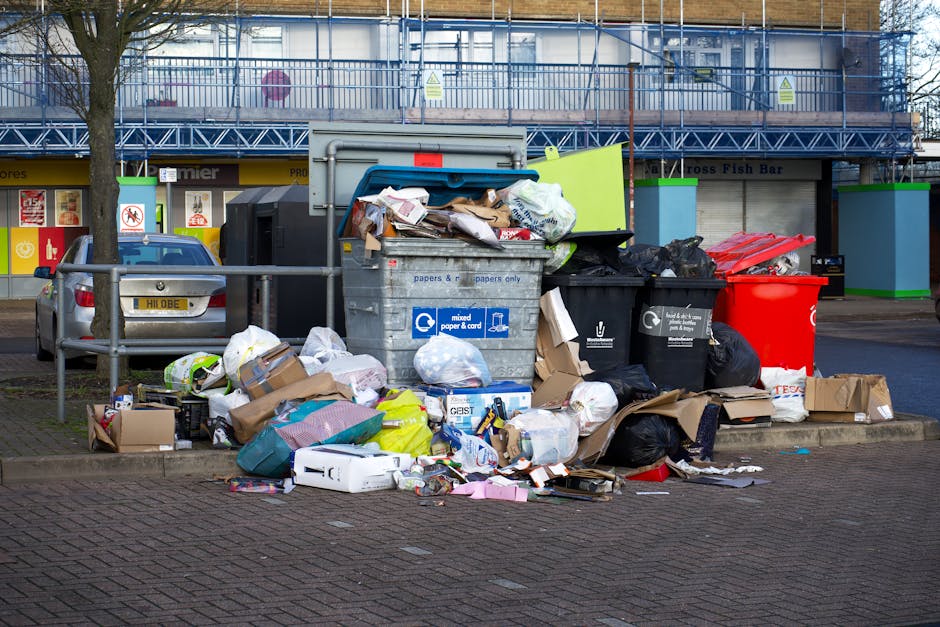
Cardinal Place small business rubbish collection Victoria: a practical guide for busy local teams
If you run a small business around Cardinal Place, rubbish has a habit of showing up at the worst possible time. Cardboard by the back door. Broken chairs in the stock room. Old packaging piling up after a delivery day. Before long, the office or shop starts to feel cluttered, and that clutter quietly chips away at time, safety, and even how professional the place looks.
Cardinal Place small business rubbish collection Victoria is really about getting that mess under control without turning it into a project you keep putting off. In this guide, we'll look at how it works, what it can solve, where businesses go wrong, and how to choose a sensible, reliable approach. Nothing fancy. Just the sort of advice that helps on a Tuesday morning when the bins are full and the team is trying to get on with work.
For businesses that need broader help beyond a single collection, it can also be useful to understand the wider service range, from business waste removal to more specific clearances such as office clearance and general waste removal. The right mix depends on what you're actually dealing with, not just what sounds easiest to book.
Table of Contents
- Why Cardinal Place small business rubbish collection Victoria Matters
- How Cardinal Place small business rubbish collection Victoria Works
- Key Benefits and Practical Advantages
- Who This Is For and When It Makes Sense
- Step-by-Step Guidance
- Expert Tips for Better Results
- Common Mistakes to Avoid
- Tools, Resources and Recommendations
- Law, Compliance, Standards, or Best Practice
- Options, Methods, or Comparison Table
- Case Study or Real-World Example
- Practical Checklist
- Conclusion
- Frequently Asked Questions
Why Cardinal Place small business rubbish collection Victoria Matters
Small businesses rarely have the luxury of spare space. A cafe cupboard becomes a storage area. A reception desk turns into a paper trail. A stock room fills up with delivery packaging, damaged items, and "we'll deal with that later" stuff. Truth be told, later often means when it's already annoying.
That is why a steady, practical rubbish collection plan matters. It helps keep customer-facing areas tidy, reduces trip hazards, and stops waste from eating into working space. It also makes day-to-day operations smoother. A clear back-of-house area makes it easier to receive stock, move equipment, and clean properly. Small thing, big difference.
There is also the image side of it. If clients or suppliers walk into a premises and see stacked black bags, broken fittings, or overflowing bins, they notice. They may not say anything, but they notice. A clean space quietly says that the business is organised and takes itself seriously.
In practical terms, businesses in and around Cardinal Place often need waste collection that is responsive, discreet, and flexible. One week it may be a few bags of mixed waste. Another week it may be shelving, old display units, or office furniture. That is where a service built around small business needs becomes useful rather than merely convenient.
Expert summary: the best rubbish collection service for a small business is usually the one that removes waste quickly, keeps disruption low, and leaves you with less to think about, not more.
How Cardinal Place small business rubbish collection Victoria Works
The process is usually simpler than people expect. You identify what needs removing, explain the access conditions, and arrange a collection time that suits the business. A decent provider will ask enough questions to avoid surprises, but not so many that booking feels like a chore.
In most cases, the job starts with a short description of the waste. Is it mainly bagged rubbish? Office clutter? Broken furniture? Mixed commercial waste? Different waste types need different handling, so being specific helps. If you're unsure, it is better to say so than guess. A small bit of honesty saves a lot of back-and-forth later.
On the day, the collection team should arrive ready to assess access, confirm what is being removed, and get the work done with as little disruption as possible. For a small business, timing matters. Early morning before opening, just after close, or between customer peaks can make the whole process feel almost invisible. Almost.
If the job involves bulky items, awkward access, or a build-up of mixed waste, a broader service may be more suitable than a simple bin collection. That is where services such as builders waste clearance can be relevant, especially if the rubbish includes renovation debris, packaging, timber offcuts, or trade leftovers.
After removal, the practical goal is straightforward: the space should feel usable again. No more "we'll have to move that first" every time someone opens a cupboard. That's the real win.
Key Benefits and Practical Advantages
The obvious benefit is that rubbish disappears. But the better benefits are the ones that change how the business works every day.
- More usable space: cleared walkways, storage areas, and work zones make the premises easier to run.
- Better first impressions: tidy spaces feel calmer and more professional to clients, suppliers, and staff.
- Less staff time wasted: no one needs to spend twenty minutes hunting for somewhere to put waste.
- Reduced safety risks: fewer loose items, awkward stacks, and overfilled bags on the floor.
- Flexible support: rubbish collection can often be arranged around trading hours, which matters in a busy area.
- Less stress: honestly, that alone is worth a lot when you're trying to keep a small business moving.
There is also a sustainability angle. Businesses increasingly want to know that waste is handled responsibly, sorted where possible, and diverted away from landfill when it makes sense to do so. If that matters to you, it is worth looking at the company's recycling and sustainability approach before you book.
Another benefit that gets overlooked: a one-off clearance can expose hidden problems. You might discover how much unused stock is still sitting around, or realise a storage habit has been quietly swallowing half a room. A rubbish collection can become a reset button. Sometimes the space has been asking for that for months.
Who This Is For and When It Makes Sense
This kind of service suits lots of small business types, especially where space is tight and waste builds up in uneven bursts rather than neat weekly cycles.
It makes sense if you are:
- a shop owner dealing with packaging, displays, and old stock
- a cafe, takeaway, or hospitality business with recurring mixed waste and occasional bulky items
- an office manager with redundant desks, chairs, files, and general clutter
- a landlord or managing agent clearing out a small commercial unit between tenancies
- a tradesperson using a base or yard that keeps collecting offcuts and packaging
- a start-up working from a compact unit where every square metre counts
It also makes sense if your current waste routine is technically "working" but barely. You know the sort of thing: bags are left by the door, someone means to arrange collection later, and then three more deliveries arrive. Before long the place starts looking like a temporary holding bay rather than a business.
For premises that are part office, part stock room, part everything else, a service like office clearance can be more appropriate than a standard waste pickup. Similarly, if the issue is old fixtures or unusable stock, furniture disposal or furniture clearance may fit better.
Step-by-Step Guidance
If you want the process to go smoothly, treat it like a small project rather than an emergency. You do not need spreadsheets and a flurry of colour-coded notes. But a little preparation goes a long way.
- Walk the space first. Look at everything that needs removing and separate general rubbish from bulky items, damaged furniture, and anything potentially sensitive.
- Decide what stays and what goes. Sounds obvious, yet this is where delays often start. If someone else owns the item or needs to sign it off, sort that out early.
- Take a quick inventory. A rough list helps the provider understand volume and access. Photos can help too, especially where the space is tight.
- Check access. Stairwells, lifts, loading points, opening hours, and parking can all affect the job. Little detail, big impact.
- Choose the right service type. Mixed commercial waste, office clutter, builders' leftovers, and bulky items are not all the same thing.
- Ask about timing and disruption. Early morning collections and quieter periods can reduce interruptions for staff and customers.
- Confirm what happens after collection. You want to know the waste will be handled properly, with sorting and recycling where appropriate.
- Book, then clear the route. Make the collection as easy as possible by keeping access open and placing items together if you can.
If you are still mapping out what kind of help you need, it can be useful to compare a general clearance with a service such as home clearance or house clearance. They may not be your exact use case, but they show the difference between light waste collection and a fuller removal service.
Small point, but it matters: don't leave decisions until the last minute. That's how a simple rubbish job becomes a half-day of improvisation and mild swearing.
Expert Tips for Better Results
Here's where experience helps. Most waste jobs run more smoothly when the business owner or manager thinks ahead a bit, even if only by fifteen minutes.
- Group waste by type where possible. Bagged waste, cardboard, metal, timber, and furniture are easier to handle when separated.
- Keep access routes clear. If the team has to move bins, boxes, or stock just to reach the waste, the job takes longer.
- Use quiet hours if you can. Less foot traffic usually means less disruption and a cleaner handover.
- Be honest about volume. Understating waste often creates awkwardness on site. Better to overestimate slightly.
- Ask how mixed waste is dealt with. A good provider should be able to explain sorting and disposal in plain English.
- Use the collection as a mini reset. If you are removing rubbish, it is the perfect moment to check what else is gathering dust.
One practical observation from working with small sites: the places that run smoothly usually have one person who owns the process. Not a committee, not a vague "someone will sort it". Just one human being who knows what is happening. That alone can reduce hassle more than you'd think.
If the business is also dealing with old stockrooms, spare fixtures, or unused storage areas, garage clearance and loft clearance can be useful comparisons, even for commercial premises. The principle is the same: remove the stuff that no longer earns its keep.
Common Mistakes to Avoid
Most waste collection problems are preventable. They are not dramatic. Just a bit annoying, and usually self-inflicted. Which, to be fair, is how many small business headaches start.
- Waiting until the space is overflowing. Once rubbish starts blocking storage or access, removal becomes slower and more disruptive.
- Mixing sensitive items with general waste. If documents, devices, or confidential materials are involved, they need thought before they go.
- Not checking the access route. A narrow stairwell or awkward parking spot can change the plan quickly.
- Choosing a service on price alone. Cheap is not always cheap if the job has to be redone or delayed.
- Assuming every waste type is treated the same. It isn't. Different materials have different handling expectations.
- Forgetting about staff communication. If the team doesn't know what is being removed, items can vanish by mistake. That is a bad day.
Another common slip is forgetting about business continuity. If your busiest hours are lunch service, customer appointments, or delivery windows, don't schedule a collection that fights with the working day. It sounds obvious, but these things get missed all the time.
Tools, Resources and Recommendations
You do not need a huge toolkit to manage rubbish sensibly. A few simple things can make life much easier.
- Basic labelled bags or boxes: useful for separating mixed waste before collection.
- A quick photo record: helps when explaining the job and estimating space required.
- A short waste log: handy for recurring collections, especially if you handle regular clear-outs.
- Access notes: gate codes, loading bay times, lift restrictions, and parking details save time.
- Document storage plan: if paper clutter is part of the problem, decide what gets shredded, archived, or removed.
It is also worth understanding the business's wider policies and expectations before booking. Pages such as insurance and safety, health and safety guidance, and payment and security can help you feel more confident about who is entering your premises and how the job is handled.
If you need to compare service breadth or want a broader overview of the company's offering, the about us page is a sensible place to start. It can help you judge whether the service feels like a fit for a small business environment rather than a one-size-fits-all operation.
Law, Compliance, Standards, or Best Practice
Waste and rubbish handling in the UK sits within a framework of legal and practical expectations. You do not need to become a compliance specialist to arrange a collection, but it helps to know the basics.
Businesses are generally expected to store, present, and transfer waste responsibly. That means avoiding fly-tipping, not leaving waste in unsafe locations, and using a provider that handles removal properly. If you produce business waste, you should also think carefully about separation, documentation, and any special handling needed for specific materials.
For many small businesses, the best practice is simple: keep waste secure, use a reputable collection service, and make sure the process is documented internally well enough that no one is guessing later. If your rubbish includes hazardous materials, confidential files, electrical equipment, or items requiring special disposal, treat those separately and ask for guidance before collection.
It is also sensible to make sure the provider has suitable insurance and clear safety procedures. You are letting people onto your premises, sometimes around staff, stock, or customers, so that part matters. It's not glamorous, admittedly, but it matters.
For businesses with fit-out debris or renovation leftovers, a specialist approach may be more suitable than standard rubbish collection. In those cases, builders waste clearance can be the better match. If the issue is mostly larger items, then furniture-focused services may be more appropriate.
Options, Methods, or Comparison Table
There is more than one way to deal with small business rubbish. The right option depends on volume, type, and how quickly you need the space back.
| Option | Best for | Strengths | Limitations |
|---|---|---|---|
| Regular bin collections | Routine day-to-day waste | Simple and predictable | Not ideal for bulky or one-off waste |
| Ad hoc rubbish collection | Unexpected build-up, one-off clear-outs | Flexible and fast | Needs clear brief and access planning |
| Office or business clearance | Furniture, filing, and mixed workspace clutter | Covers more than basic rubbish | Usually overkill for a few small bags |
| Specialist builders waste removal | Refit leftovers, construction debris | Better suited to heavier material | Not necessary for simple commercial waste |
In plain English: if it is just general rubbish, keep it simple. If the waste is bulky, mixed, or tied to a move, fit-out, or reorganisation, a broader service is usually worth it. This is where many businesses save time by choosing the right tool for the job instead of forcing a small problem into a big process.
Case Study or Real-World Example
Imagine a small design studio near Cardinal Place. Over a few months, the team has accumulated old packaging, sample boards, broken office chairs, and a couple of shelving units that no longer fit the layout. Nothing dramatic, just the sort of everyday clutter that slowly makes a space feel tighter and more chaotic than it really is.
The manager finally books a rubbish collection after noticing that staff are moving items around the same boxes every week. That is usually the sign, by the way. When the clutter becomes part of the furniture, it is time.
The team walks the space, separates paper waste from bulky items, and clears a path to the loading point. A collection is arranged for early morning, before client meetings begin. By 10 a.m., the studio feels lighter, the back area is open again, and the receptionist no longer has to apologise for the pile by the door. No miracle. Just sensible organisation.
That is the real value of a good collection service: it restores function. The room can do its job again.
Practical Checklist
Use this before booking Cardinal Place small business rubbish collection Victoria:
- List the items or waste types that need removing
- Separate general rubbish from bulky items if possible
- Check access, parking, and loading restrictions
- Confirm the best time to avoid disrupting customers or staff
- Identify anything sensitive, hazardous, or unusual
- Take a few photos if the waste is awkward or mixed
- Ask about recycling, sorting, and disposal practices
- Review insurance and safety information
- Make sure one person owns the booking and handover
- Clear the route before the collection team arrives
If you tick those off, the job is usually straightforward. If you skip them, the day tends to get more complicated than it needs to be. Funny how that works.
Conclusion
Cardinal Place small business rubbish collection Victoria is less about "taking out the rubbish" and more about keeping a business space clear, safe, and ready to work. For small teams, that can make a surprisingly big difference. It protects space, improves presentation, and cuts down on the slow grind of clutter that tends to build up unnoticed.
The best results usually come from a simple formula: know what needs removing, choose the right level of service, and make access easy. Nothing extravagant. Just clear thinking, a bit of planning, and a provider that understands commercial realities.
And if you're sitting there looking at a back room, a store cupboard, or a little heap of "we'll sort that later", well, later might be now.
Get a free quote today and see how much you can save.
Sometimes the most helpful thing for a busy business is not a bigger plan, just a cleaner space and a quieter mind.
Frequently Asked Questions
What does Cardinal Place small business rubbish collection Victoria usually include?
It usually covers general commercial rubbish, bagged waste, packaging, and sometimes bulky items depending on the service arranged. If you have furniture, fixtures, or mixed waste, it may need a broader clearance rather than a basic collection.
Is this the same as office clearance?
Not always. Rubbish collection tends to focus on waste removal, while office clearance usually covers a wider mix of items such as desks, chairs, files, and storage contents. If your premises are cluttered beyond normal waste, office clearance may fit better.
How do I know if I need business waste removal or a one-off collection?
If you generate rubbish regularly and need an ongoing service, business waste removal is usually the better fit. If you have a build-up from a move, refresh, or spring clear-out, a one-off collection may be enough.
Can bulky furniture be removed with rubbish collection?
Sometimes yes, but it depends on the provider and the type of item. Larger items are often better handled through furniture clearance or furniture disposal services, especially if several pieces need taking away.
What should I do before the collection team arrives?
Try to group the waste together, clear access routes, and make sure someone is available to confirm what is going. A few minutes of prep can save a lot of confusion on the day.
Is it okay to mix office clutter with general rubbish?
It can be, but only if the provider is happy to handle mixed waste and none of the items need special treatment. Confidential papers, electronics, and unusual materials should be separated and flagged early.
How do I keep disruption to a minimum?
Book outside peak hours if possible, choose the right access point, and give the collection team clear instructions. Early morning collections are often the easiest for busy small businesses.
What if I'm not sure how much rubbish there is?
That is common. A few photos and a rough description are usually enough to start. It is better to be approximate than to delay the booking while trying to make it perfect.
Does sustainability matter when choosing a rubbish collection service?
Yes, for many businesses it does. You may want to know whether items are sorted for recycling where possible and whether the company has a clear approach to responsible disposal. That is part of choosing a service you can trust.
What are the biggest mistakes small businesses make with rubbish collection?
The most common ones are leaving it too late, underestimating access issues, and choosing a service without checking what kinds of waste it can actually handle. Small oversights, but they can make the whole process far more awkward than necessary.
Can rubbish collection help if my stock room is overloaded?
Yes, often it can. In fact, stock rooms are one of the places where clutter builds up quietly. If the issue includes old shelving, broken items, or redundant storage, a fuller clearance can be more useful than a simple bin pickup.
How do I decide between waste removal and a full clearance service?
Think about scope. If it is mainly bags and loose waste, standard waste removal may be enough. If you are clearing out furniture, fixtures, mixed materials, or a room that has become unmanageable, a more complete clearance service is probably the smarter choice.